
Ask ten people where to live in Portugal and most will say Lisbon, without asking a single question about who’s asking. A retired couple from Florida, a family relocating from Toronto, and a Brazilian professional prioritising safety above almost everything else are looking for genuinely different things, and the right city for one is often the wrong one for another. The good news is that Portugal offers real, distinct answers for each of those profiles, not just variations on the same postcard.
Here’s how the country’s main options actually compare, and which one tends to fit which kind of move.
Why the safety question matters before any of the rest
Before getting into individual cities, it’s worth addressing the concern that sits underneath most relocation decisions, particularly for anyone coming from a country where personal security shapes daily choices. Portugal ranked seventh in the world on the 2026 Global Peace Index, and International Living named it the world’s safest country for retirement in 2026, citing low crime rates and a stable society as the core reasons. That safety isn’t concentrated in one city or region. Violent crime is rare nationally, and the main risks anywhere in the country are the ordinary petty theft and pickpocketing found in any tourist heavy area, not the kind of concern that shapes where a family feels comfortable letting children walk to school. That baseline holds true across every city on this list, which means the choice between them comes down to lifestyle fit, not safety trade offs.
Lisbon: the default, and the right one for some
Lisbon is where most people start looking, and for a genuine subset of movers it’s also where they should end up. It offers the country’s strongest job and business ecosystem, the widest range of international schools, the biggest English speaking community, and direct flights to most of the world. It suits professionals still working, families who want the broadest choice of schooling, and anyone who wants city amenities within walking distance. It’s also the most expensive city in the country by a meaningful margin, with rent commonly running €1,200 to €1,800 for a one bedroom in a good area, and it’s the option where a newcomer is most likely to feel like one more foreigner in a very international crowd rather than genuinely settling into a Portuguese community.
Porto: the calmer, more affordable alternative
Porto answers most of what draws people to Lisbon without the price tag or the crowds. It’s more compact, noticeably more affordable at roughly €1,000 to €1,400 for a central one bedroom, and retains a stronger everyday Portuguese character even as its international community grows. Neighbourhoods like Foz do Douro and Matosinhos have become genuinely popular with international families and retirees who want coastal living without the Algarve’s seasonal tourist swings, and the city works well for families, remote workers, and retirees who want a real city without Lisbon’s scale.
Cascais: the polished choice for affluent families
Cascais sits close enough to Lisbon for easy access to the capital while offering a calmer, more residential coastal setting, and it has become one of the most established expat hubs in the country as a result. It has some of Portugal’s strongest international schools, a well developed expat and social infrastructure, and a noticeably higher cost of living than Porto or the interior. It suits families with the budget to prioritise schooling and community over saving on rent, and professionals who want to be near Lisbon without living inside it.
The Algarve: the retirement and lifestyle favourite
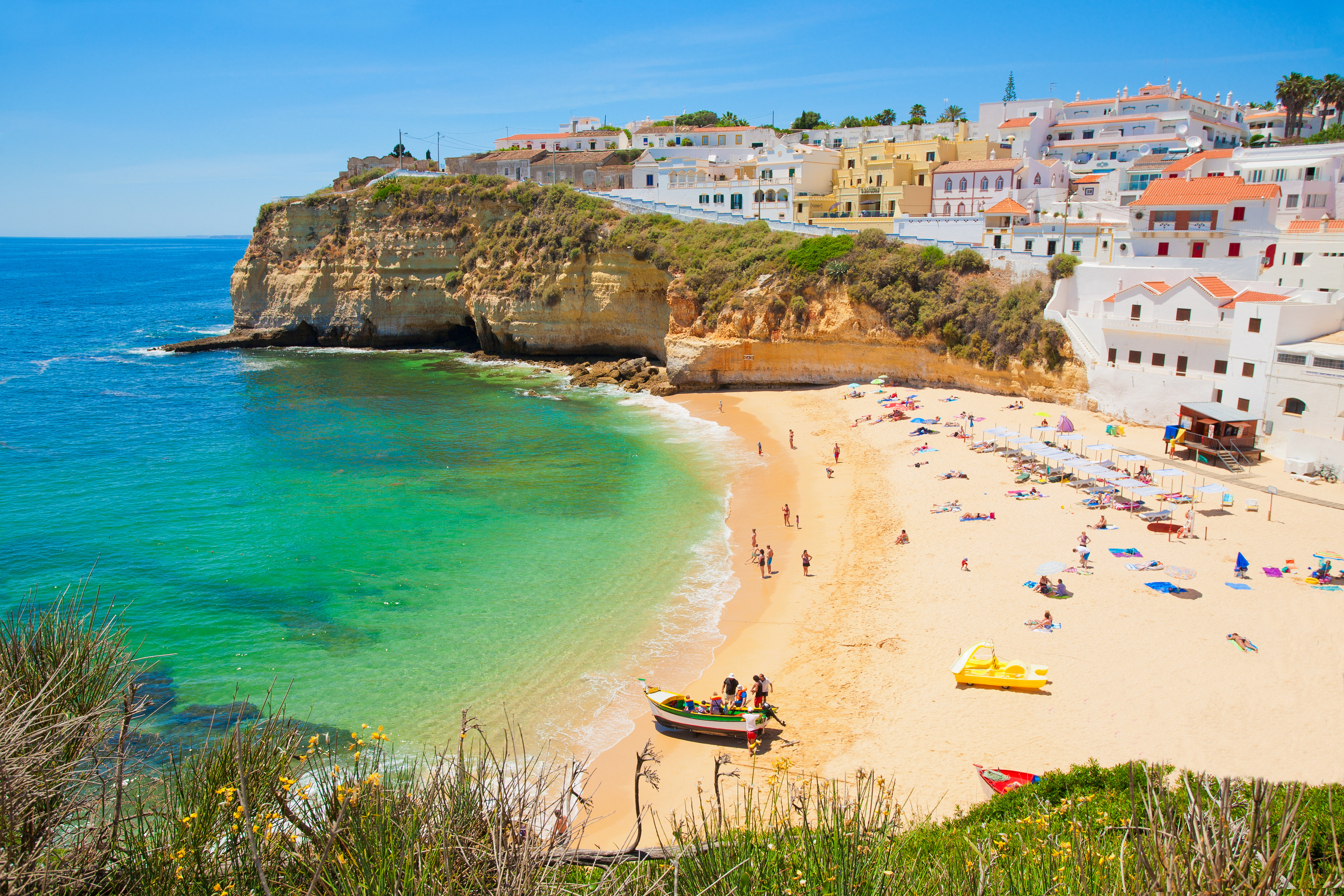
The Algarve remains the single most popular region for retirees and sun seeking expats, and the reasons haven’t changed: warm weather nearly year round, an established British and international community built up over decades, golf courses, beaches, and a genuinely relaxed pace of life. Faro and the surrounding towns offer a mix of resort style living and more residential options, with rent typically running €800 to €1,300 depending on the town and season. The trade off is a market that swells noticeably with tourists in summer, pushing up prices and crowding in the most popular coastal towns, so anyone considering the Algarve should look closely at the specific town rather than the region as a whole.
Braga and the interior north: budget conscious and family friendly
Braga has quietly become one of the most recommended cities for expats who want a genuinely high functioning Portuguese city without southern Portugal’s price premium. It’s more affordable than Lisbon or Porto, has a growing international community of younger professionals and digital nomads, and works well for families on a tighter budget who still want good schools and services. The wider northern interior, including smaller cities, extends that value further for anyone prioritising cost over international infrastructure.
Coimbra and Aveiro: slower living, lower cost, strong healthcare
For retirees and remote workers who want a genuinely quieter pace without moving to a rural village, Coimbra and Aveiro offer a real middle ground. Coimbra, Portugal’s former medieval capital and a major university city, combines a strong healthcare system with meaningfully lower costs than Lisbon or Porto, and has seen growing numbers of D7 and D8 applicants choosing it specifically for walkability without big city stress. Aveiro, with its canals and compact centre, offers a similar profile with a slightly more picturesque, small city feel.
Madeira: the island option for remote workers and retirees
Madeira operates almost as its own category. Funchal offers a mild climate that barely changes across the year, dramatic landscapes, and a dedicated digital nomad community, most notably the village of Ponta do Sol, built specifically to host remote workers. It appeals strongly to retirees and remote professionals who want an outdoor forward lifestyle and don’t need to be near mainland Portugal’s business centres, though the island’s more limited flight connections are worth weighing against that appeal.
Matching the region to the move
There’s no single right answer here, which is exactly why this decision deserves more thought than picking whichever city shows up first in a search. A retired American or Canadian couple prioritising community and golf will likely be happiest in the Algarve or Cascais. A Brazilian family focused on security, good schools, and a real sense of settling in, rather than a resort bubble, often fits better in Porto, Braga, or Coimbra than in the more transient, tourist heavy pockets of the south. A British remote worker who wants year round mild weather and an established community may find Madeira or the Algarve suits better than either big city. Getting this choice right before committing to a lease or a purchase, ideally by having someone search the specific neighbourhoods that fit a family’s actual priorities rather than just the region’s reputation, tends to matter more for long term satisfaction than almost any other decision in the move.